

Simulation
Controllers face increasing airspace complexity, tighter safety margins, and evolving operational procedures.
Indra’s MicroNav Simulation Suite provides the environment to develop controller competence from initial qualification to operational readiness, while validating airspace and procedural changes controllers will live by.
The MicroNav Simulation Suite combines tower and radar capability to support every phase of air traffic control, whether military or civil; a full turnkey solution for aerodrome, approach and en-route, trusted by leading ANSPs, military organizations, and training academies worldwide.
Airspace redesigns, new procedures, and infrastructure changes carry risk if not validated. Our simulation suite lets you test changes with your own operational equipment, minimising risk and service disruption.

Simulation for training, validation, and operational development
Tower controllers manage some of the most complex and time-pressured operations in ATC — preventing ground conflicts and runway incursions even during low-visibility procedures and when there are multiple simultaneous movements.
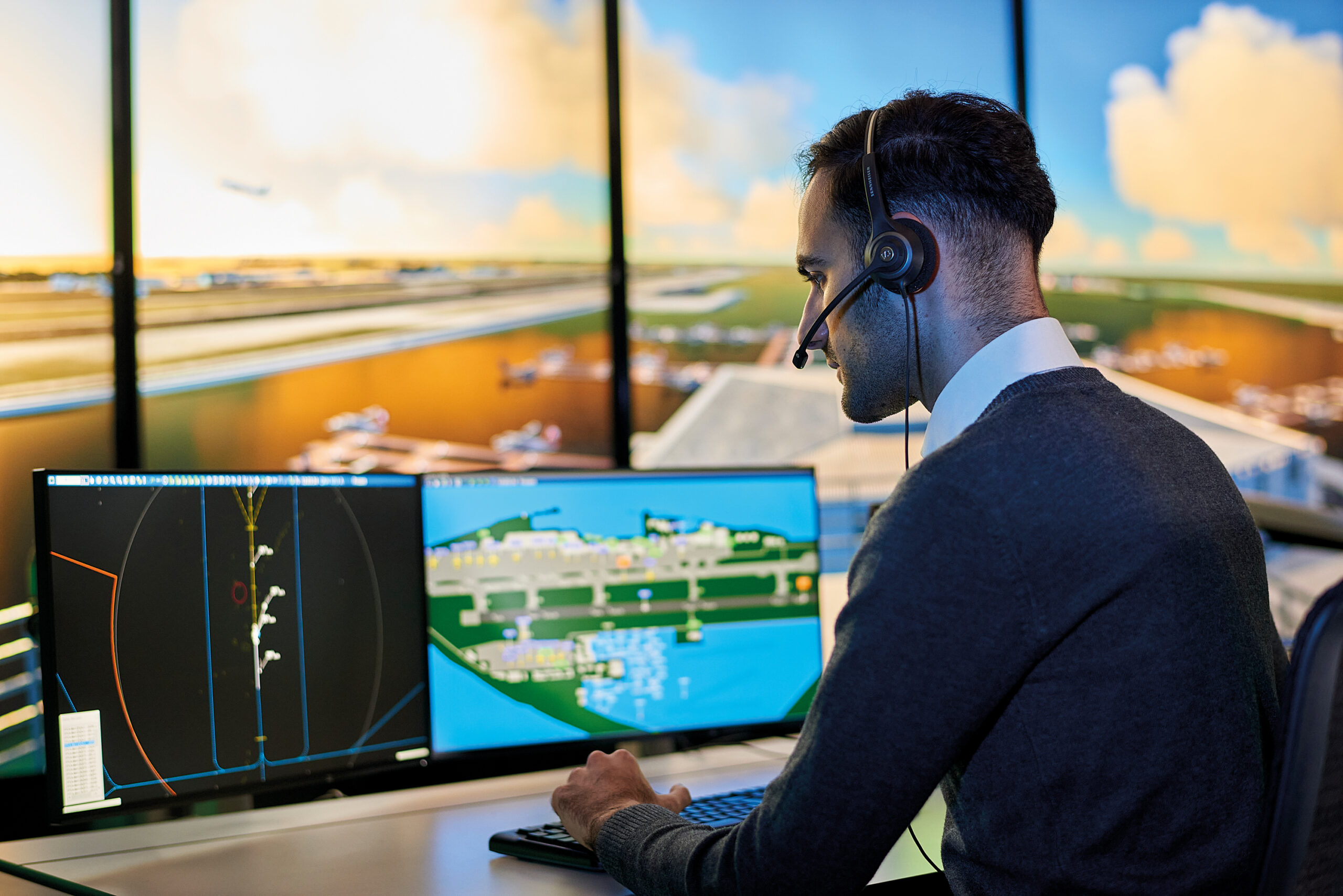
MicroNav Tower places trainees in an immersive simulated environment that replicates these pressures, combining high-fidelity 3D visuals with comprehensive ground movement radar displays. It supports everything from basic skills development to complex combined tower and ground operations, with display configurations that scale to operational needs.

En-route and approach controllers need training scenarios that reflect the complexity of their airspace — multiple adjacent sectors, realistic traffic densities, and nuances specific to their procedural operations.
MicroNav Radar provides the tools to build and deliver these scenarios across the full spectrum of controller skill requirements, from ab initio students learning basic separation to experienced controllers managing emergency procedures and degraded surveillance conditions.

Instructor assessment has long relied on subjective observation.
MicroNav Insights changes this by capturing quantifiable performance metrics throughout every exercise, giving instructors evidence-based tools to identify strengths, target areas for improvement, and track student progression objectively.
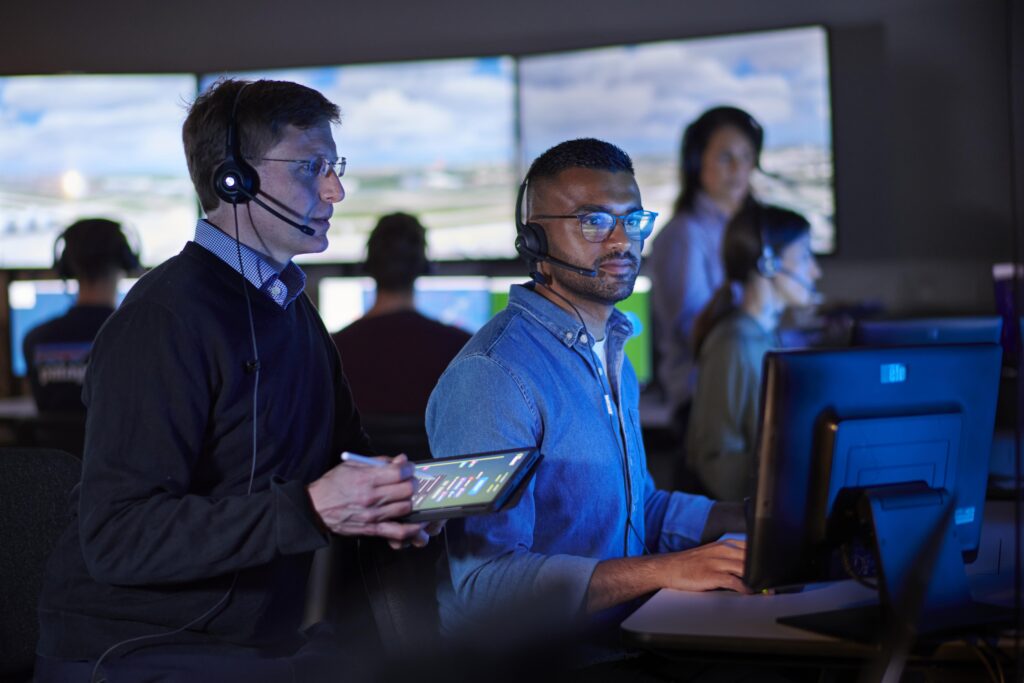
Instructors assess student performance in real time via a digital assessment form, then review sessions through an interactive 4D timeline — replaying and annotating movements, communications, and scored objectives in a single interface
During exercises, instructors score performance in real time via a digital form tagging events to specific aircraft and moments. Post-session, that data feeds directly into a 4D preview, a synchronized replay of all movements, communications and score objectives on an interactive timeline.
The same analytics capability supports operational evaluation — measuring the impact of airspace changes, new procedures, or environmental modifications through data rather than assumption.
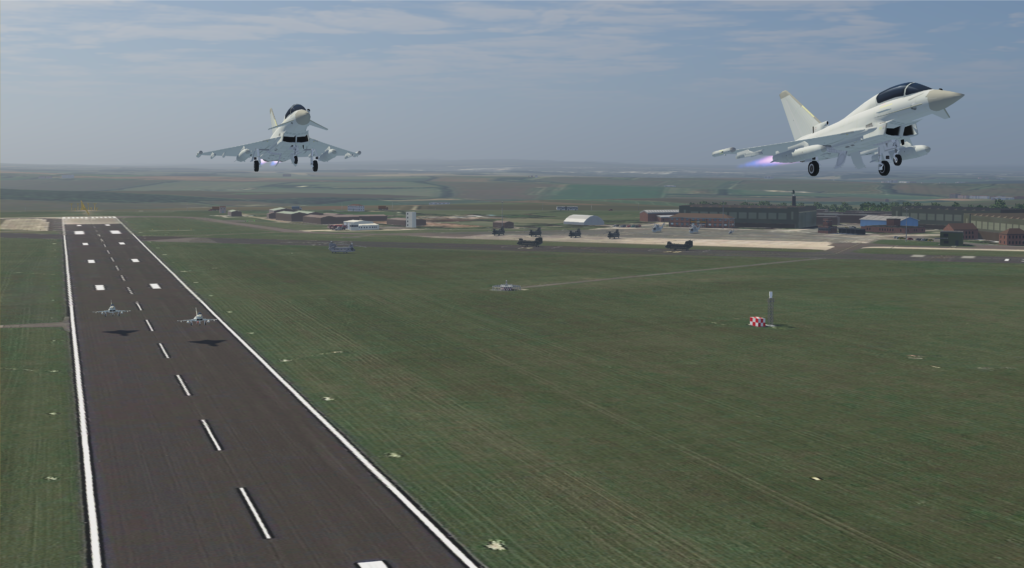
Military controllers and air battle managers face challenges that civil controllers never face — managing fast jet formations, coordinating multi-threat intercepts, and executing transition-to-war procedures under pressure.
Purpose-built military capabilities deliver training for these exact scenarios, from emergency flameout approaches and combat recoveries to air-to-air refuelling and CAP management.
Classified scenarios can be built and maintained entirely in-house, giving your force complete control over sensitive operational data throughout the training cycle.
The MicroNav Simulation Suite includes a range of tools that extends the capability of the training environment and gives organisations full control over their simulation.
- Operational ATM equipment connects directly with the simulation, so controllers train on the exact HMIs they will use in live operations.
- Integrated voice communication and speech recognition compliant with ICAO DOC 4444 phraseology enables exercises to run with fewer or no pseudo-pilots, reducing staffing overhead without compromising realism.
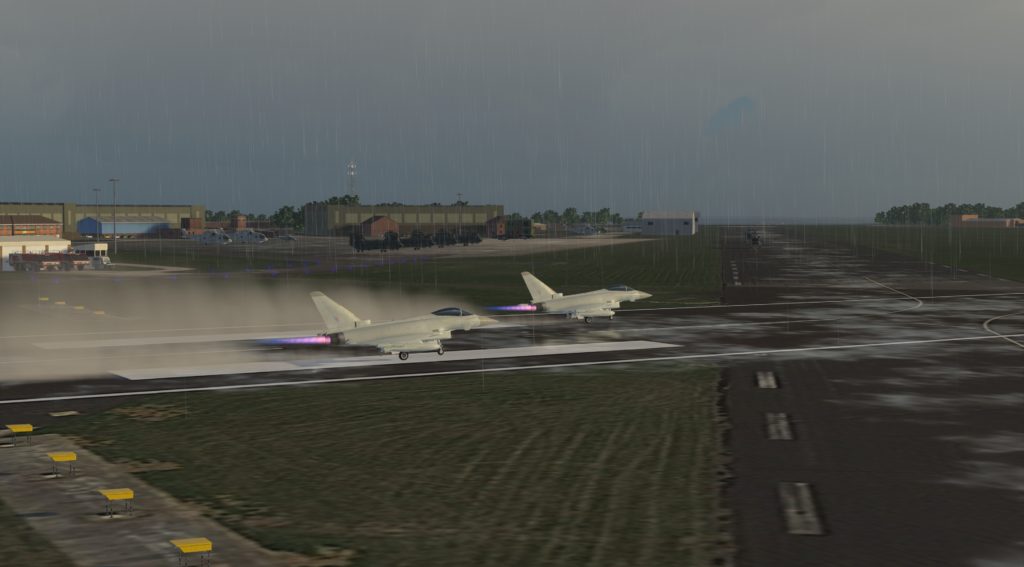
- Proprietary 3D image generation delivers photorealistic visuals with dynamic weather and realistic aircraft behaviour across monitor and projector-based tower configurations.
- Intuitive editing tools give your team full control to build and update airport layouts, 3D scenes, and exercises without reliance on external contractors.
Contact us